
Indefensibly Insufficient: Comparative Anthropology
Why comparative anthropology, as it has been and is attempted, is Indefensibly Insufficient to a truly *Ideal* Human Ideal Self

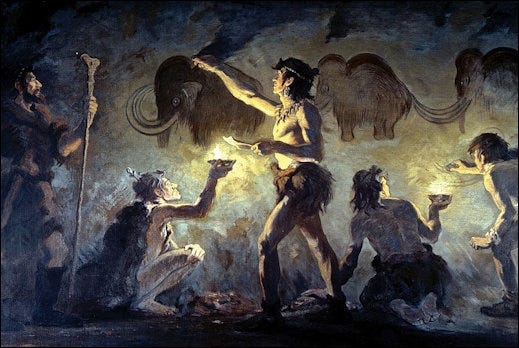
Somewhere in my Initial Introspection I needed to dedicate a section to define and defend comparative anthropology clearly. What better place to check off this lingering responsibility than before my critique of comparative anthropology?
What is comparative anthropology? It’s in the name; I try not to name things arbitrarily. Comparative anthropology is not only the method of comparing Human existences, but also the wealth of wisdom that such comparison generates. There are other similar pursuits, and I have considered naming it something else at different times. “Psychohistory”, which I was introduced to via Isaac Asimov, is the study of what will happen using past data from Human societies. “Comparative Anthropology” concerns not just what will happen, instead giving a much more general understanding of what Humans are, have been, and will be.
The fundamental logic underlying Comparative Anthropology is that if all aspects of an environment could be different, the only reason there are similarities across environments is because of a descriptively Intrinsic Identity. “Intrinsic” itself is defined here as “independent of environment”.
If behaviors of Homo sapiens persist across environments with varying times and spaces, where each environment could scarcely impact the other, then there must be a reason for this persistent behavior. There must be a cause–it could not be due to chance. There must then be some intractable, inevitable, perennially-manifesting “Human Nature” that explains the obvious similarities of Homo sapiens living in disparate environments. These natural tendencies would then also condemn all Homo sapiens, regardless of environment, to some similarity.
By understanding what these natural tendencies of Homo sapiens are, we can understand what our own tendencies are: We can know what we are intractably condemned to be and do, and we can affirm our given identity, our given environment and cultivated environment much more readily thereafter as themselves inescapable–and recognize our affirmation of this reality as inescapable as well.
If wisdom is the noticing of similarity across experiences, obviously derived from the nature of intelligence itself as fundamentally mere pattern recognition, then comparative anthropology is specifically the wisdom of what Humans are. The Ideal experiment for the comparative anthropologist remains simulating a multitude of Human beings in widely varying environments with only one independent variable between them–their Intrinsic–to perfectly deduce what Humans are. As a Human–such wisdom is incredibly relevant to you. As a Human, to lack the wisdom of what Humans are–as Cicero similarly noticed from his summation of history–is to remain a child.
Comparative Anthropology is fundamentally a method to amass wisdom. It is a way by which to know yourself, and other Humans, without having to personally experience countless environments. It is a way to notice patterns across environments–a way to deduce the Intrinsic of yourself and other Humans since “environment” cannot explain similarities between different environments.
As I have just now described it, comparative anthropology is perfectly unblemished. It can compliment my other Humanism as if born from it. Yet it is not only I the First Humanist who has used comparative anthropology. As previously mentioned, Confucius made use of comparative anthropology when observing which Human societies survived best, and so did nearly every notable mind in history. What then did these past comparative anthropologists get wrong? The flaw of past comparative anthropology is the same reason Plato’s Republic–his Ideal Society–is not actually an Ideal Society.
The critical quality Comparative Anthropology is lacking is breadth, diversity, and imagination when accounting for the possible environments Humans can experience. Comparative Anthropology, such as that of Confucius, might tell us how to be Human in a resource-scarce environment, but how might we be Human in a post-scarcity environment? What is the Ideal Society in the Ideal Environment? To compare all previous Humans is not to deduce the Intrinsic qualities of Homo sapiens. It is to deduce the Intrinsic qualities of Homo sapiens given the evolutionary environment.
As previously reasoned, the prerequisite to deduce the “Intrinsic” is that the environments aren’t similar and thus the Intrinsic must explain similarity. But a glaring similarity across all previous (and contemporary) environments of Homo sapiens is “resource-scarcity”. In all of Human History thus far, it is false to claim that the environments were truly all that different. If environments have similarities, then the observed similarities in Individuals across environments are no longer certainly Intrinsic, but only possibly Intrinsic. The similarities in the environment confound the explanation that these similarities are due to Intrinsic qualities of the Individual.
What if the Human Society that is Stable, Sustainable, and Prefered is different in an evolutionary resource-scarce environment, than in the Ideal post-scarcity Environment? What if Humans readily prefer death as a necessary and healthy part of life in the evolutionary resource-scarce environment, but would disprefer death as a horrible senseless cruelty in an Ideal post-scarcity environment? Indeed across time and space, and vastly different environments, our Human ancestors very often converged upon considering death to be a healthy, natural, and ultimately good part of all life.
Does this mean comparative anthropology teaches us our Human Ideal Self would also consider death to be a “healthy, natural, and ultimately good part of all life”?
No, because our comparative anthropology has in this case been unable to compare relevant environments. No, because our comparative anthropology has not been able to compare Humans living in Ideal post-scarcity environments, a Utopia defined as “a reality where you can change all aspects of reality”. Such that our comparative anthropology has been unable to even satisfy the first half of its ontology–that of comparing Humans in every possible/relevant environment. Is an environment in which we even can halt death not obviously a relevant environment to first experience if we seek to know if Humans Ideally prefer to halt death?
And so how I have defined Comparative Anthropology earlier stands as the only definition derived from a truly Ideal Intrinsic Ideal Self: “The Ideal experiment for the comparative anthropologist remains simulating a multitude of Human beings in widely varying environments with only one independent variable between them–their Intrinsic–to perfectly deduce what Humans are.”
Until Comparative Anthropology can compare Humans in that Ideal post-scarcity Environment, the conclusions of our comparison–the values and beliefs convergent in all evolutionary resource-scarce environments–remain only possibly Intrinsic to Humanity.
So why even invoke Comparative Anthropology in “Sculpting Galatea”, and give a long list of general Human beliefs and values, if I myself admit my Comparative Anthropology is unable to compare the most relevant environment of all? The most relevant environment for an Ideal Self is an Ideal Environment, and if I cannot compare such an environment, aren’t my attempts at Comparative Anthropology doomed to inaccuracy and irrelevance?
The simplest reason we may still make use of Comparative Anthropology, even though the environments available to compare are only those with scarce resources and thus natural selection, is because Homo sapiens evolved in such a resource-scarce environment. We are the way we are, as creatures at the mercy of natural selection, because of the environment we evolved to adapt towards. Inevitably whatever our Intrinsic will be is then necessarily also determined by this resource-scarce environment.
For example, Social Interactions will still doubtlessly remain in Utopia. Because Homo sapiens as we evolved needed to be social. Social interactions introduce restrictions on the individual, and obviously their society, that remain Ideal independent of infinite resources.
I am not defending the continuation of the evolutionary resource-scarce environment. It is not that our Intrinsic Ideal entails a resource-scarce environment, but rather that our Intrinsic Ideal Self’s Ideal Environment is inescapably molded by the resource-scarce environment that molded our Intrinsic in the first place.
We are what we are given, and what we are given are not values and beliefs selected for within an Ideal post-scarcity Environment. The values and beliefs we are given we happen to have because of our ancestors–who we are the biological continuation of–and our ancestors needed them to survive an evolutionary, resource-scarce environment. And if we are their biological continuation, then so too are we psychologically, mentally, spiritually, and Intrinsically their continuation for all aspects of a biological creature arise from their biology.
We will make our own Garden Of Eden, and doubtless it will have an apple tree.
Very interesting point. I would note that whenever humans seem to reach close to a post-scarcity level, or more precisely a sudden rise in material conditions, they always seem to start expanding, hence the colonization of america, imperialism in Africa and Asia, etc etc, where they meet once again with resource scarce environments, almost as if they were looking for it. Current human societies are generally better than they have ever been and we are facing never seen before problems in response (Fertility crisis, mental health crisis, and many others) I can't help but suspect that a more primitive society might be the one that actually is ideal to our ideal intrinsically human-self.